Brief Description
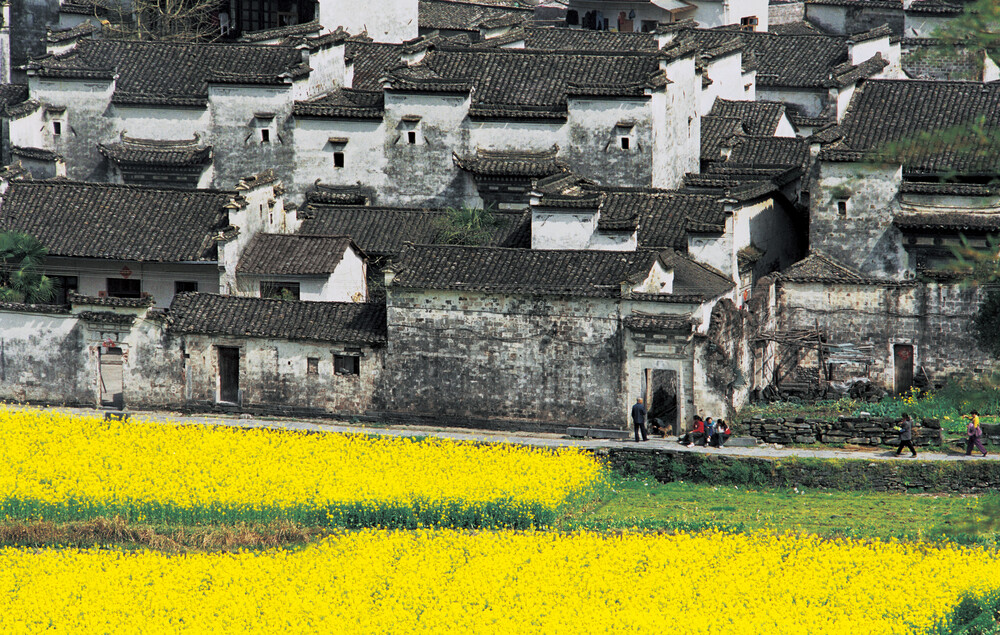
The two traditional villages of Xidi and Hongcun preserve to a remarkable extent the appearance of non-urban settlements of a type that largely disappeared or was transformed during the last century. Their street ...
Outstanding Universal Value - Brief Synthesis
Xidi and Hongcun are two outstanding traditional villages, located in Yi County, Huangshan City in south Anhui Province, with commercial activities as their primary source of income, family and clan-based social organization, and well known for their regional culture. The overall layout, landscape, architectural form, decoration, and construction techniques all retain the original features of Anhui villages between the 14th and 20th centuries.
Deeply influenced by the traditional culture of pre-modern Anhui Province, these two villages, Xidi and Hongcun, were built by successful officials or merchants returning home from official appointments and business, and gradually developed into models of conventional Chinese village construction. Xidi is surrounded by mountains and built along and between three streams running east-west, which converge at the Huiyuan Bridge to the south. Hongcun is located at the foot of a hill next to a stream which forms two pools, the Moon Pond in the centre of the village and the other to the south. Characterised by rhythmic space variation and tranquil alleyways; and with water originating from a picturesque garden, the whole reflects the pursuit of coexistence, unity and the harmony of man and nature. The unique and exquisite style of Anhui buildings is conveyed in plain and elegant colors, their gables decorated with delicate and elegant carvings, their interiors filled with tasteful furnishings. The rigid patriarchal system together with gentle and sincere folk customs reflects the cultural ideas of scholar-bureaucrats in feudal society who paid special respect to Confucianism and Neo-Confucianism. These surviving villages bear scientific, cultural and aesthetic values with their 600-plus-year history. They are rich sources for the study of regional histories and cultures.
Criteria (iii) : The villages of Xidi and Hongcun are graphic illustrations of a type of human settlement created during a feudal period and based on a prosperous trading economy.
Criteria (iv) : In their buildings and their street patterns, the two villages of southern Anhui reflect the socio-economic structure of a long-lived settled period of Chinese history.
Criteria (v) : The traditional non-urban settlements of China, which have to a very large extent disappeared during the past century, are exceptionally well preserved in the villages of Xidi and Hongcun.