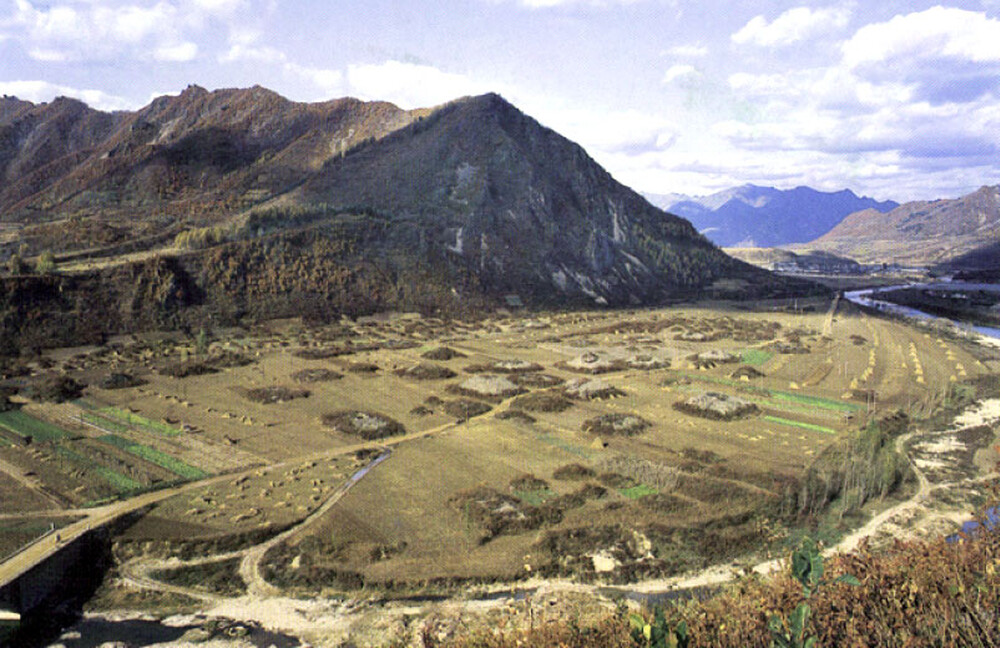
Brief Description
The site includes archaeological remains of three cities and 40 tombs: Wunu Mountain City, Guonei City and Wandu Mountain City, 14 tombs are imperial, 26 of nobles. All belong to the Koguryo culture, named after the ...
Outstanding Universal Value - Brief Synthesis
Located in northeast China, the Capital Cities and Tombs of the Ancient Koguryo Kingdom dating from the 1st century BCE to the 7th century CE comprise archaeological remains of three cities and 40 tombs: Wunu Mountain City in Huanren Manchu Autonomous County, Liaoning Province; Guonei City, Wandu Mountain City, and the 40 tombs in Ji’an municipality, Jilin Province.
The Koguryo kingdom was a regional power and ethnic group from the year 37BCE until the kingdom moved its capital to Pyonyang in 427CE.Wunu Mountain City, Guonei City and Wandu Mountain City served as capitals of Koguryo during the early and middle period of the Kingdom. Wunu Mountain City was built in 37BCE as the first capital of the Koguryo regime. Surrounded by a defensive wall with three gates which was partly built in stone and in other places exploited the cliff face, the city included a palace, military camp, watch tower, houses and warehouses. Guonei City, now surrounded by the city of Ji’an, was built on the plain with a stone-built defensive wall and had separate palace and residential zones. Wandu Mountain City, the only Koguryo mountain city capital whose general layout was planned with the large palace as its core, created a mountain city that perfectly combined the Koguryo culture with the natural environment. Guonei City and Wandu Mountain City were the economic, political and cultural centers of the Koguryo for hundreds of years. Guonei City was destroyed in the year 197 CE when the Koguryo were defeated by another power. Wandu Mountain City was built in 209 CE. Both cities were damaged in wars and rebuilt several times, serving alternately as the capital. Guonei City played the role of a supporting capital after the main Koguryo capital moved to Pyongyang; it is one of the few plains city sites with stone city walls still standing.
The tombs of kings and nobles of the ancient Koguryo Kingdom are distributed in the Donggou Ancient Tombs Area of Wandu Mountain City. The 12 imperial tombs take a stepped pyramid form constructed of stone. The burial chambers within were roofed with clay tiles. The tombs of the nobles have stone chambers covered with earth mounds and are decorated with wall paintings, depicting scenes of daily life, sports, hunting, nature, gods, fairies, and dragons. The stele of King Haotaiwang dating from 414CE, tells the story of the founding of the Koguryo kingdom.
The capital cities and tombs are exceptional testimony to the vanished Koguryo civilisation. The layout and construction of the capital cities influenced the city planning and building of later cultures. The tomb paintings represent a rare artistic expression in medieval North-east Asia and together with the stele and inscriptions show the impact of Chinese culture on the Koguryo.