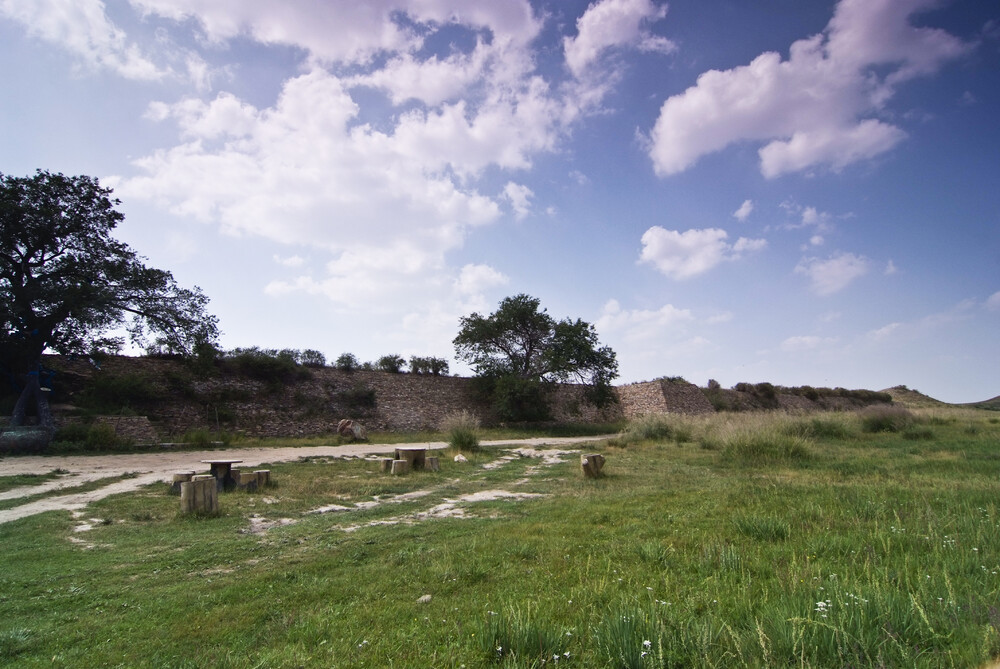
Brief Description
North of the Great Wall, the Site of Xanadu encompasses the remains of Kublai Khan’s legendary capital city, designed by the Mongol ruler’s Chinese advisor Liu Bingzhdong in 1256. Over a surface area of ...
Outstanding Universal Value - Brief Synthesis
The Site of Xanadu is the site of a grassland capital characteristic of cultural fusion, witnessing clashes and mutual assimilation between the nomadic and agrarian civilisations in northern Asia. Located on the southeast edge of the Mongolian plateau, it was the first capital (1263-1273) of Kublai Khan and later the summer capital (1274-1364) of the Yuan Dynasty. The city site and associated tombs are located on the grassland steppe with a north south axis determined by traditional Chinese feng shui principles, backed by mountains to the north and a river to the south.
From Xanadu, the mounted warriors of Kublai Khan unified the agrarian civilisations of China, and partly assimilated to the latter’s culture, while extending the Yuan empire right across North Asia. The plan of Xanadu, with Palace and Imperial cities enclosed partly by the Outer City containing evidence of the nomadic encampments and royal hunting enclosure, comprises a unique example of this cultural fusion. Evidence of large water control works instigated to protect the city exists in the form of remains of the Tiefan’gan Canal. As the place where Kublai Khan rose to power, hosted religious debates and entertained foreign travellers whose writings gave inspiration down the centuries, it has achieved legendary status in the rest of the world and is the place from where Tibetan Buddhism expanded.