Brief Description
Located in the Alashan Plateau in the hyper-arid and temperate desert region of northwestern China, the Badain Jaran Desert is a meeting point for three sandy regions of China and is the country’s third largest ...
Outstanding Universal Value - Brief Synthesis
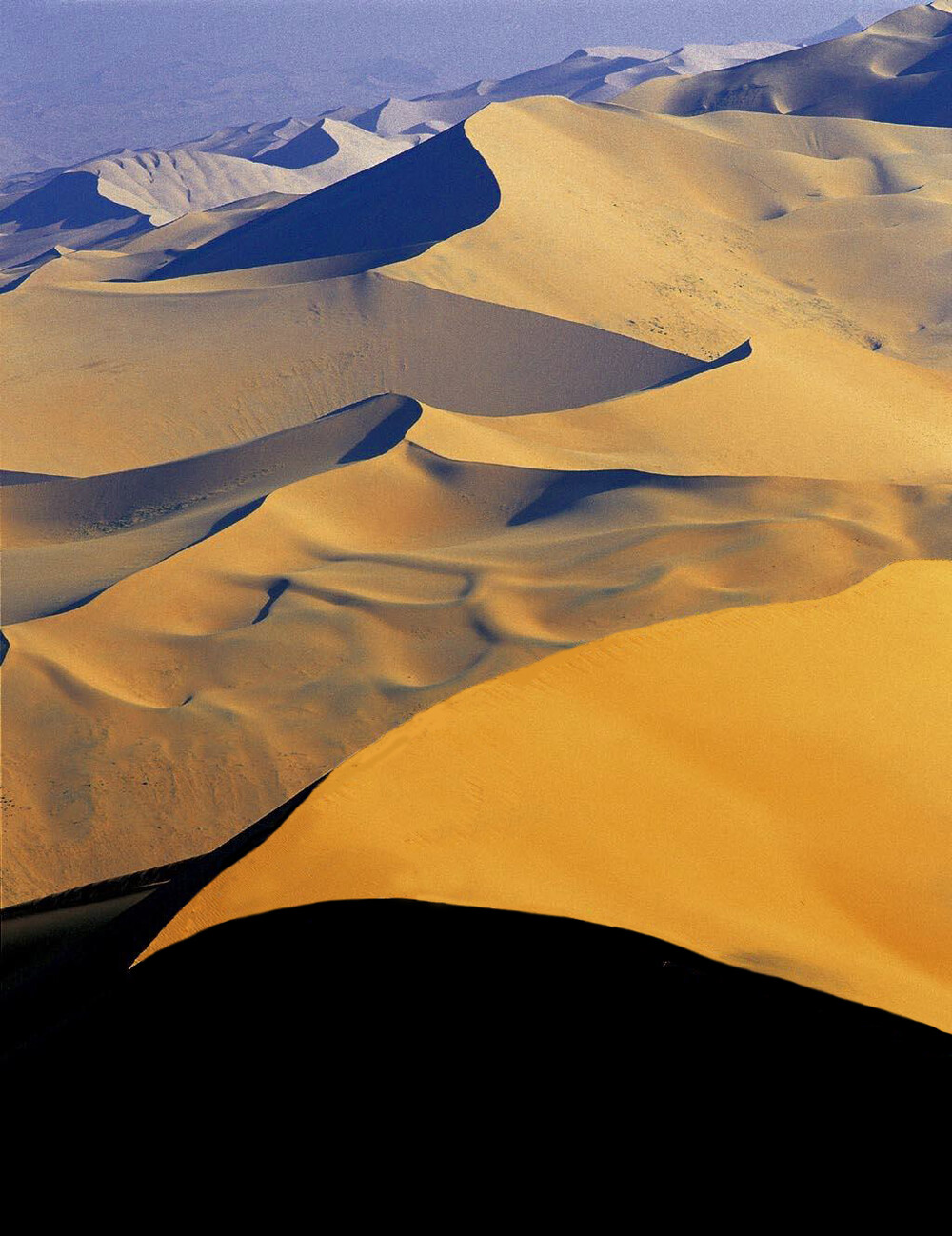
The property covers an area of 726,291.41 ha, with a buffer zone of 891,114.36 ha. Badain Jaran Desert, located in the Alashan Plateau in the hyper-arid and temperate desert region of northwestern China, is the third largest desert in China and hosts an irreplaceable natural heritage of lake and dune desert features. It stands out with its high density of mega-dunes, including the tallest stabilized sand dunes in the world, a myriad of interdunal lakes, and a range of aeolian landform features. The mega-dunes form an undulating landscape, among which the tallest sand dune achieves a relative height of 460 m. For a sandy desert and sand sea, Badain Jaran is home to abundant plant life and mostly nocturnal animal life. The lakes are mostly saline and diversely coloured, providing a favourable habitat for thriving worms, molluscs, crustacea and some fish.
Due to its geographical location and geological background, the property is strongly influenced by climate change and the continuing tectonic uplift of the Qinghai-Tibet Plateau. Its desert-forming process is continuing, so that the site and its relics offer insights into long-term climatic changes and desert forming processes. The size and integrity of the site is important in understanding its ongoing evolution.
The property holds outstanding aesthetic values thanks to the significant abundance of mega-dunes, aeolian landscape diversity and to the uniqueness of its lakes.