Brief Description
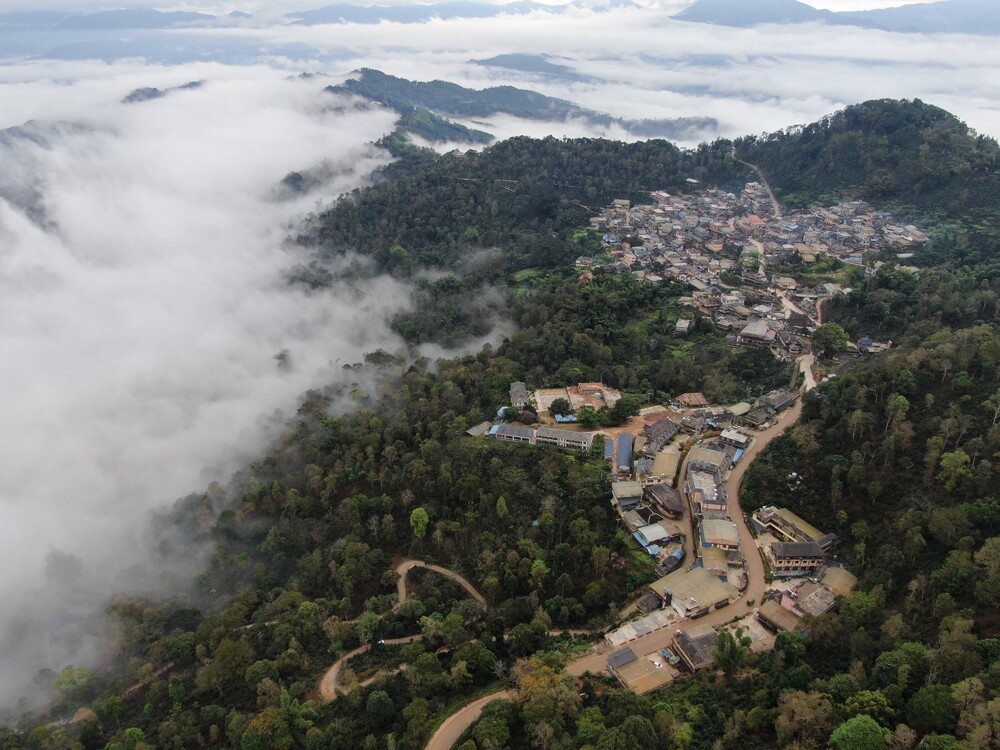
Located on Jingmai Mountain in southwestern China, this cultural landscape was developed over a thousand years by the Blang and Dai peoples following practices that began in the 10th century. The property is a tea ...
Outstanding Universal Value - Brief Synthesis
The Cultural Landscape of Old Tea Forests of the Jingmai Mountain in Pu’er is located in Huimin Town, Pu’er City, Yunnan Province, in southwestern China. This organically evolved cultural landscape consists of a tea production area of old tea groves, tea plantations, forests, and traditional villages on Jingmai Mountain. This land-use system has been developed over a thousand years by the Blang and Dai peoples following traditional practices that date back to the 10th century. The traditional understorey cultivation of old tea trees is a method that responds to the specific conditions of the mountain ecosystem and subtropical monsoon climate combined with a particular governance system maintained by the Indigenous communities residing in this area. Traditional ceremonies and festivities related to the Tea Ancestor belief that special spirits live in the tea plantations, local fauna, and flora are at the core of this cultural tradition.
Criterion (iii): The Cultural Landscape of Old Tea Forests of the Jingmai Mountain in Pu’er represents an exceptional testimony of the understorey tea cultivation traditions that enabled the development of a complementary spatial distribution of different land uses providing ecosystems and microclimates that support both the cultivation of old tea forests and the well-being of communities residing in this organically evolved cultural landscape. Blang and Dai peoples sustained these traditions for over thousand years by following a tripartite social governance system of tribe-government-religion that, based on the Tea Ancestor belief, has protected the natural resources and preserved the old tea forests. Traditional practices follow careful considerations of the mountain climate, topographic features, and local flora and fauna, demonstrating important local and traditional knowledge that safeguards cultural and biological diversity.
Criterion (v): The Cultural Landscape of Old Tea Forests of the Jingmai Mountain in Pu’er is an outstanding example of a sustainable land-use system based on a combination of horizontal and vertical land-use patterns. This land-use system permits the complementary use of natural resources in the mountainous environment of Jingmai Mountain and represents an exceptional example of a human interaction by Blang and Dai peoples with a challenging environment that is vulnerable to negative impacts of modernisation, urban development, and climate change. The location and layout of the traditional villages and the style of residential buildings represent the cultures and traditional knowledge of Blang and Dai peoples.