Brief Description
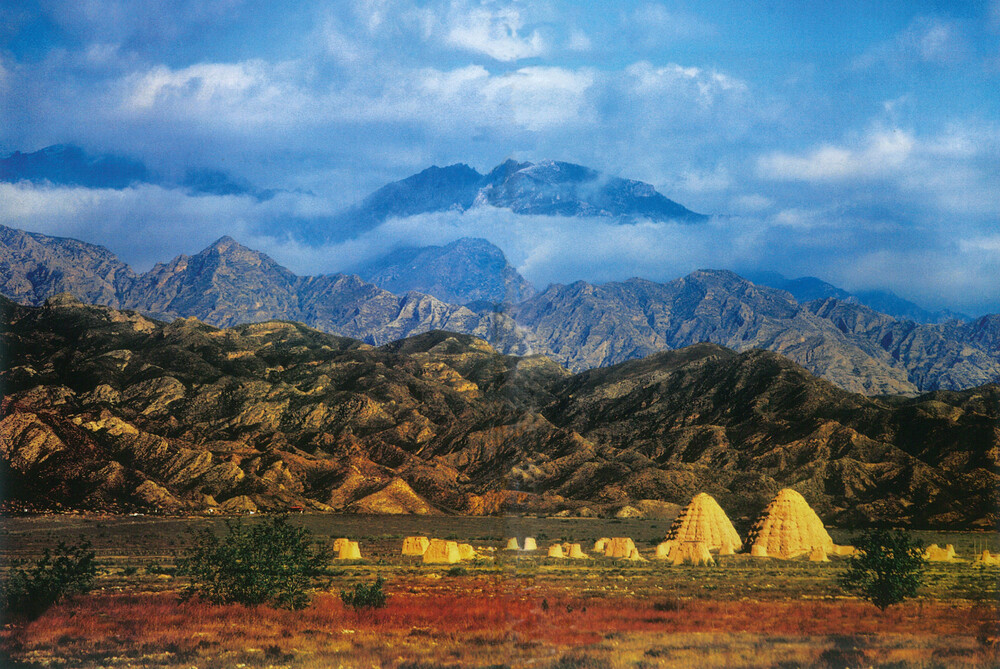
Located in the foothills of the southern Helan Mountains in Ningxia, this necropolis is the imperial cemetery of the Xixia Dynasty. It includes nine imperial mausoleums, 271 subordinate tombs, a northern ...
Outstanding Universal Value - Brief Synthesis
The Xixia Imperial Tombs are a necropolis of the Xixia Dynasty, located in the Ningxia Hui Autonomous Region of north-west China, in the foothills of the Helan Mountains, and formed from the 11th to 13th centuries. Comprising nine imperial mausoleums, 271 subordinate tombs, a northern architectural complex and thirty-two flood control works, this necropolis is a unique testimony to the Xixia Dynasty and its imperial lineage, which lasted nearly 200 years and was established by the Tanguts, nomadic herdspeople who settled in a region crossed by the Silk Road, and brought together a diverse population composed, in addition to the Tanguts, of Han, Tubo, Uighur, Khitan and Jurchen peoples.
Through contact with merchants, caravans, monks and nomads, the Tanguts developed a civilisation based on the Chinese imperial model, of which Buddhism was an essential part. This is evidenced by very large, diverse architectural sites, as well as a wealth of objects excavated at the property, including fragments of stelae in Tangut script.