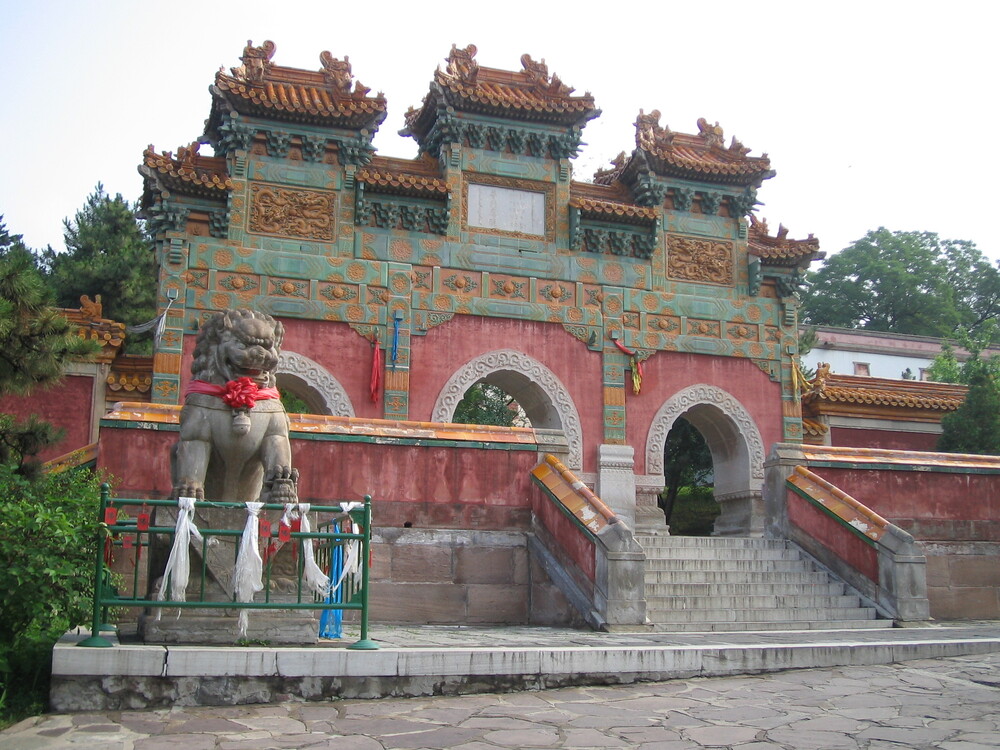
Brief Description
The Mountain Resort (the Qing dynasty's summer palace), in Hebei Province, was built between 1703 and 1792. It is a vast complex of palaces and administrative and ceremonial buildings. Temples of various ...
Outstanding Universal Value - Brief Synthesis
The Mountain Resort of palaces and gardens at Chengde with its Outlying Temples is the largest existing imperial palace-garden and temple complex in China, covering a total area of 611.2ha. Built between 1703 and 1792 as the Qing emperors’ detached summer palace near the imperial Mulan hunting ground 350 kilometres from Beijing, it was a base from which to strengthen administration in the border regions. The 12 outlying imperial temples, some built in the architectural styles of the ethnic minorities, are distributed across the eastern and northern hills outside the palace and garden area. They fostered relations with the ethnic minorities and helped to safeguard the Mountain Resort. Every summer and autumn, emperors of the Qing dynasty including Kangxi and Qianlong handled military and government affairs of the country and received leaders of ethnic minority groups and diplomatic envoys from foreign countries here, and went north from here to hold the Mulan Autumn Hunting. Important historical events of the Qing dynasty took place here, and the historical sites and objects have witnessed the consolidation and development of China as a unitary multi-ethnic state.
The Mountain Resort and its Outlying Temples, Chengde is a classic masterpiece of Chinese palace architecture, gardening art and religious architecture.The landscape of the Mountain Resort is designed following the topography of natural hills and water. As an outstanding example of Chinese natural landscape gardens and palaces, it inherits and carries forward China’s imperial gardening tradition. By integrating elements of Han, Mongolian and Tibetan architectural art and culture the Outlying Temples crystallize the achievements of cultural exchanges and integration among different ethnic groups in the course of development of Chinese architecture.
The manmade landscape of the Mountain Resort and its Outlying Temples perfectly integrates with the special natural environment of Chengde, such as the danxia landform. Its natural and harmonious layout is a successful practice of the traditional Chinese geomantic culture (fengshui). As a representative of ancient Chinese garden design, it once exerted influence in Europe, and has played an important role in the history of 18th century landscape garden design worldwide.