Brief Description
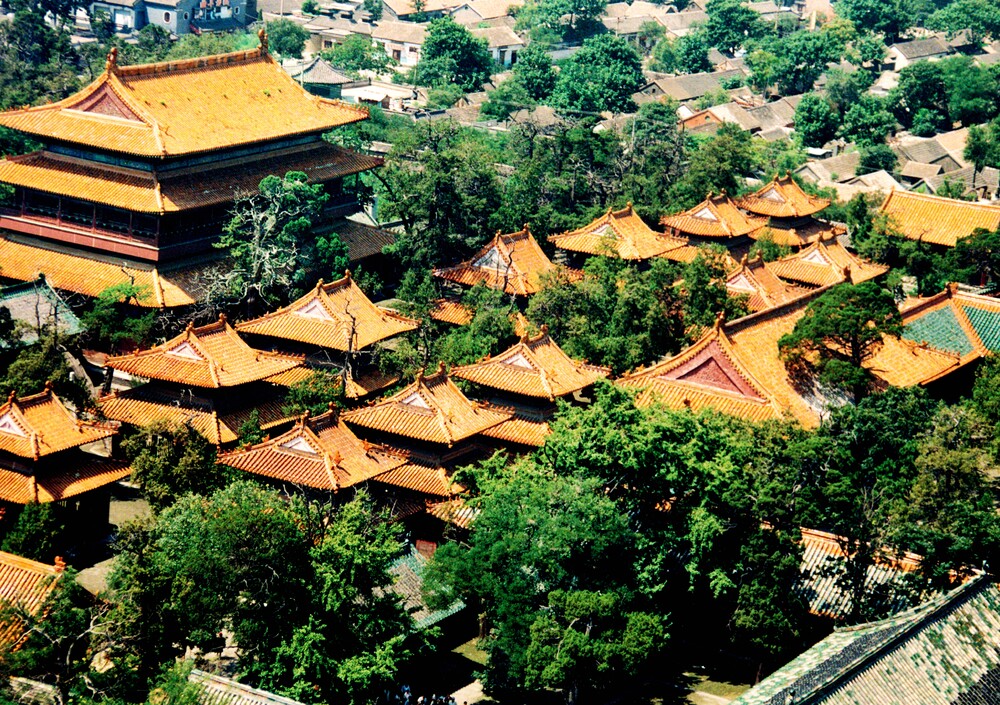
The temple, cemetery and family mansion of Confucius, the great philosopher, politician and educator of the 6th–5th centuries B.C., are located at Qufu, in Shandong Province. Built to commemorate him in 478 B.C., ...
Outstanding Universal Value - Brief Synthesis
Confucius, a renowned philosopher, politician and educator in ancient China whose system of belief involving philosophy, politics and ethics (subsequently known as Confucianism) has exerted profound influence on Chinese culture, was revered as the Sacred Model Teacher for Ten Thousand Generations by Chinese emperors. Located in his birthplace, Qufu City of Shandong Province, China, the Temple of Confucius was built to commemorate and offer sacrifices to Confucius in 478 BC. Having been destroyed and reconstructed over the centuries, it now covers 14 hectares, with 104 buildings dating from the Jin to Qing dynasties including the Dacheng Hall, Kuiwen Pavilion and Xing Altar, and over 1,250 ancient trees. The Temple houses more than 1,000 stelae made at different times, and precious objects such as Han stone reliefs, carved pictures depicting the life of Confucius, and the stone dragon carvings of the Ming and Qing dynasties. The Temple is the prototype and model for all the Confucius temples widely distributed in countries in East Asia and Southeast Asia, particularly in terms of layout and style.
Located 1,100 meters to the north of Qufu City, the Cemetery of Confucius covers an area of 183 hectares. It contains Confucius’ tomb and more than 100,000 graves of his descendants.
Lying to the east of the Temple, the Kong Family Mansion developed from a small family house linked to the temple into an aristocratic mansion in which the male direct descendants of Confucius lived and worked.Following a fire and rebuilding of the temple with an enclosure wall on the model of an imperial palace in the 14th century, the mansion was rebuilt a short distance from the temple. Subsequently expanded, then destroyed again by fire and rebuilt in the late 19th century, it now covers 7 hectares with a total of some 170 buildings. Over 100,000 collections are kept in the Mansion; among them the ten ceremonial utensils of the Shang and Zhou dynasties, the portraits of Confucius made in different periods and clothes and caps dating to the Ming and Qing dynasties are the most famous. Furthermore, the more than 60,000 files and archives of the Ming and Qing dynasties collected in the Mansion not only provide a credible record of all kinds of activities in the Mansion for more than 400 years, but are highly valuable for studying the history of the Ming and Qing period.
The buildings were designed and built with meticulous care according to the ideas of Confucianism regarding the hierarchy of disposition of the various components. In the Ming period many outstanding artists and craftsmen applied their skills in the adornment of the temple, and in the Qing period imperial craftsmen were assigned to build the Dacheng Hall and Gate and the Qin Hall, considered to represent the pinnacle of Qing art and architecture.
Confucianism has exerted a profound influence not only in China but also on the feudal societies of Korea, Japan and Vietnam and had a positive influence on the Enlightenment of 18th century Europe. The Temple of Confucius, the Cemetery of Confucius, and the Kong Family Mansion are not only outstanding representatives of oriental architectural skills, but they also have a deep historical content and are an important part of the cultural heritage of mankind.