Brief Description
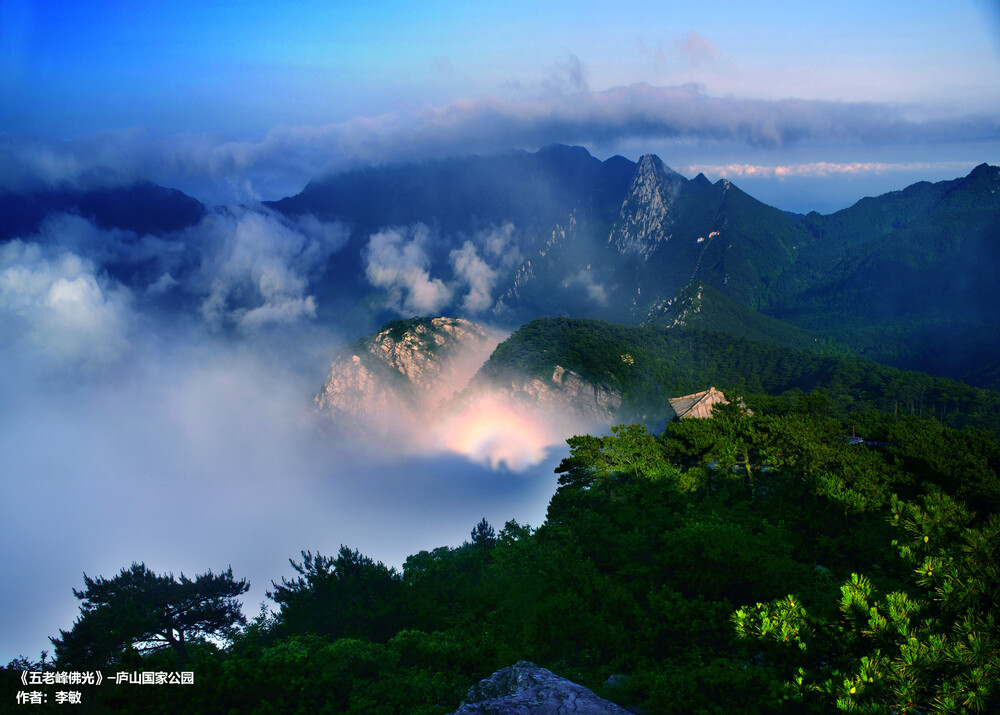
Mount Lushan, in Jiangxi, is one of the spiritual centres of Chinese civilization. Buddhist and Taoist temples, along with landmarks of Confucianism, where the most eminent masters taught, blend effortlessly into a ...
Outstanding Universal Value - Brief Synthesis
Mount Lushan is located in Jiujiang City, Jiangxi Province. The property area of Lushan National Park occupies a total area of 30,200 hectaresand its highest Peak, Hanyang Peak, is 1,474 meters above sea level. Bordered on the north by the Yangtze River and on the south by Poyang Lake, Mount Lushan presents an integral scene of river, hills and lake, the beauty of which has attracted spiritual leaders, scholars, artists and writers for over 2,000 years. More than 200 historic buildings are located in the Lushan National Park; complexes of prayer halls that have been rebuilt and extended many times to create an ongoing centre for study and religion. These include the Buddhist East Grove Temple complex begun by Huiyuan in 386 CE; the West Grove Pagoda begun around 730 CE; the Temple of Simplicity and Tranquility built during the Tang dynasty as the repository of Taoist scriptures, and the White Deer Cave Academy originally established in 940 CE and revived in the late 12th century during the Song dynasty when Zhu Xi instigated the spread of Confucius’ political and ethical teaching. This complex continued to be extended up to the 19th century to include many temples, study halls and libraries. Other important features include the stone single-span Guan Ying Bridge of 1,015 CE and more than 900 inscriptions on cliffs and stone tablets. In addition there are around 600 villas built by Chinese and foreign visitors in the late 19th and 20th centuries, when the area became a popular resort and was, during the 1930s and 40s the official Summer Capital of the Republic of China. The villas reflect various architectural fashions and are laid out within the landscape in accordance with Western planning concepts prevalent at the time.
Mount Lushan has an important place in Chinese history and culture. It is an outstanding representative of Chinese landscape culture, as well as a remarkable model of Chinese academy-based education, and a focal point for the integration of Chinese and Western cultures, once acting as the cultural center of southern China. The significant cultural developments and political events occurring over the course of Lushan’s history have influenced the course of Chinese history.
The natural beauty of Lushan is perfectly integrated with its historic buildings and features, creating a unique cultural landscape which embodies outstanding aesthetic value powerfully associated with Chinese spiritual and cultural life. Combining nature and culture, Mount Lushan represents the Chinese national spirit and epitomizes its cultural life.